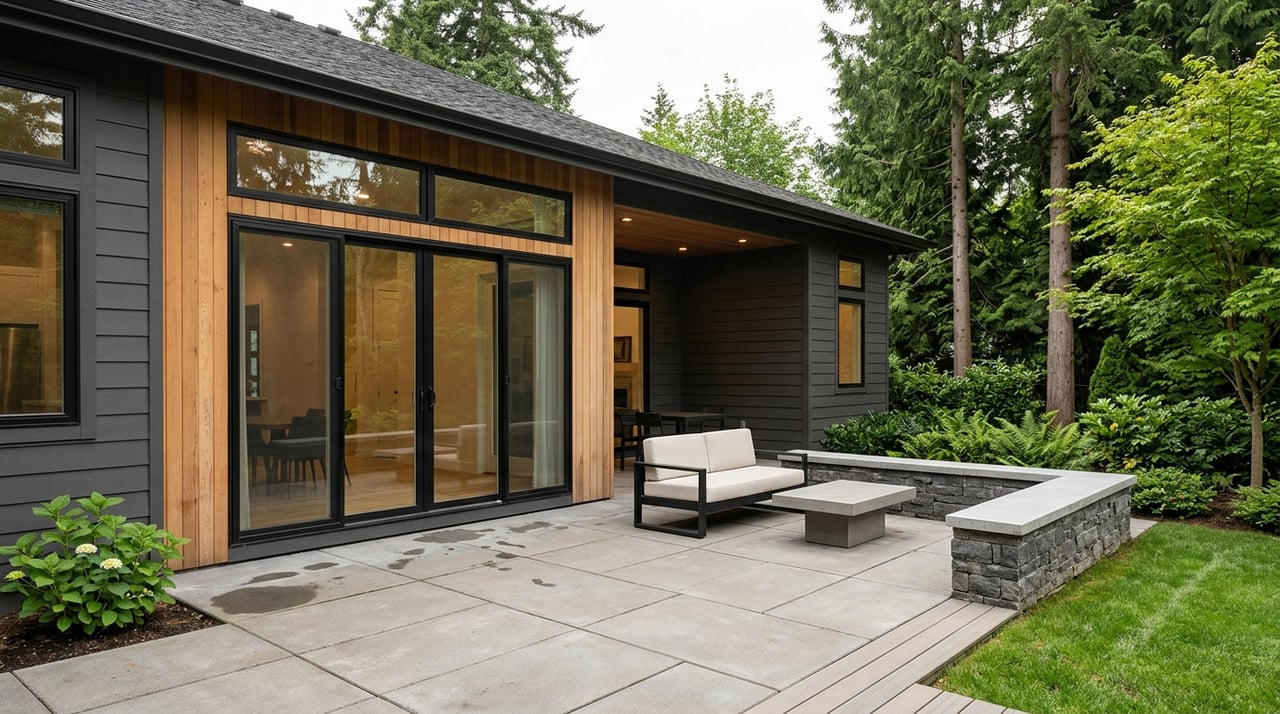
Key Factors When Investing in Bothell Rental Property
Amit Gupta March 31, 2026
Amit Gupta March 31, 2026
If you are thinking about buying a rental home in Bothell, the headline numbers only tell part of the story. Strong population growth, a high-income resident base, and access to major job centers can make the area appealing, but smart investing here depends on matching the right property to local demand, financing, and operating realities. This guide will help you evaluate Bothell rental opportunities with a more strategic lens so you can underwrite with confidence. Let’s dive in.
Bothell benefits from a location that connects you to the broader Seattle-Bellevue-Everett corridor. The city highlights its position about 11 miles northeast of Seattle, along with proximity to life-science and medical-device employers, plus the presence of the University of Washington Bothell and Cascadia College. That mix supports demand from professionals, students, and staff looking for convenience and flexibility.
The local demographic picture also matters. According to U.S. Census QuickFacts for Bothell, the population reached 51,770 in July 2024, up 7.5% from April 2020. The same source reports a median household income of $140,427 and a median gross rent of $2,346, which points to a relatively affluent rental market, even if acquisition costs can pressure returns.
Transit improvements may further shape demand over time. The city notes that Bothell Way NE links SR 522 and I-405, and NE 185th Street is planned as a corridor for Sound Transit’s STRIDE BRT service starting in 2026. For investors, that can make well-located homes, townhomes, and smaller multifamily properties more compelling than homes that rely entirely on car access.
Before you focus on finishes or projected rent, look at what the city’s housing inventory actually tells you. Bothell had an estimated 20,824 physical housing units in April 2023, and city housing data shows about 52% are single-family homes, about 34% are apartments and multifamily buildings with five or more units, and about 9% are manufactured homes.
That broad mix is only part of the story. The city’s housing technical appendix shows that only about 5% of all units are in 2-4 unit middle-housing structures. It also shows that rental inventory is heavily concentrated in 1- and 2-bedroom homes, with about 73% of rental units in that range and only about 5% having four or more bedrooms.
That means your property type matters more than many investors assume. A 1-2 bedroom townhome or smaller rental may align more naturally with Bothell’s current renter profile, while a larger detached home may require a more specific demand thesis to perform well. If you are looking at a bigger home, you should be clear about who the likely renter is and why that household would choose your property over other options.
In Bothell, bedroom count is not just a listing feature. It is a key underwriting variable.
Because the local rental mix skews strongly toward 1-2 bedroom units, you should compare a property’s layout to the type of demand the market already supports. A compact, well-located home may generate stronger renter interest than a larger property with more maintenance and a narrower audience.
This does not mean larger homes cannot work as rentals. It means you should avoid assuming that more square footage automatically creates better returns. In many cases, price per bedroom, expected turnover, and the likely renter pool will tell you more than the total living area.
Bothell is not standing still. The city adopted Ordinance 2407 to allow middle housing in all residential zones, and it notes that accessory dwelling units are currently allowed with single-family homes, except in the Downtown Subarea where they can also be accessory to a multifamily unit.
The city is also updating its Housing Action Plan, with focus areas that include housing variety, housing choices, transit-oriented development, and monitoring of housing goals. On top of that, Bothell’s adopted housing targets call for 12,782 new units from 2020 to 2044, according to the city’s Housing Overview.
For you as an investor, this means supply growth should be part of the hold-period analysis. Properties near transit corridors or redevelopment areas may benefit from stronger long-term demand, but they may also face more nearby competition as new units come online. Underwriting should reflect both possibilities.
In the Pacific Northwest, operations can make or break a rental’s performance. Bothell’s Surface Water Management guidance notes that stormwater runoff from roofs and hard surfaces flows into nearby waterways and that the city conducts annual inspections of public and private stormwater systems.
That matters because maintenance in Bothell is not just cosmetic. The city also warns on its rain and flooding page that fall and winter debris can block storm drains and cause pooling or flooding. If you own rental property here, roof condition, gutters, drainage, landscaping, and yard cleanup should all be part of your operating budget.
Many investors underestimate these recurring costs when they first run numbers. A property with older roofing, poor drainage, or deferred exterior maintenance may look attractive on the purchase side but become expensive quickly. In Bothell, a realistic maintenance reserve is a core underwriting input, not a nice-to-have line item.
Value-add strategies can work, but only if the path is actually feasible. Bothell’s Permit Center explains that new multifamily or commercial buildings, new single-family homes, additions, decks, and new accessory buildings are permitted based on square footage and construction type, while many remodels are permitted based on project valuation and may include added fees.
If your investment thesis depends on an addition, an ADU, or a major remodel, verify the permit path early. You should also budget for review time, fees, and site-specific constraints that could affect cost. Tree cover, drainage conditions, and existing building systems can all change the economics of a project.
This is especially important in a market like Bothell, where value-add potential often looks appealing on paper. The deal only works if the renovation is practical, permitted, and supported by expected rent.
Financing can shape your returns just as much as rent levels. According to Freddie Mac’s maximum LTV guidelines, purchase and no-cash-out refinance loans can go up to 85% loan-to-value for a 1-unit investment property and 75% for a 2-4 unit investment property. Cash-out refinance limits are lower at 75% for a 1-unit investment property and 70% for a 2-4 unit property.
The practical takeaway is simple: you should expect to bring meaningful equity into the deal. In a higher-cost market like Bothell, even a good property can become difficult to hold if your underwriting only works under ideal leverage and rate assumptions.
For renovation-focused opportunities, Fannie Mae’s HomeStyle Renovation product may be relevant because it can finance repairs and accessory dwelling units. Fannie Mae states that purchase transactions can go up to 75% of the purchase price plus renovation costs or the as-completed appraised value, whichever is lower. If you are pursuing an older home with upside, this may be worth discussing with your lending team.
Bothell’s rent benchmarks are useful, but you should understand what they measure. Zillow reports average asking rent in Bothell at $2,575 as of March 10, 2026, while the Census Bureau reports median gross rent of $2,346 in the 2020-2024 ACS via QuickFacts.
Those numbers are not interchangeable. Zillow tracks asking rents, while Census figures use a different method and time frame. For underwriting, that means you should use rent benchmarks as directional inputs and avoid treating a single market-wide number as a guaranteed rent outcome for your property.
The same Census source suggests a rough implied gross annual rent-to-value ratio of about 3.0% when compared with median owner-occupied value. That is not a cap rate, but it does reinforce an important Bothell reality: returns are likely to be highly sensitive to financing costs, operating expenses, and rent growth assumptions.
If you want a cleaner way to compare rental opportunities in Bothell, focus on metrics tied to local market conditions.
Key numbers to track include:
These metrics connect more directly to Bothell’s housing mix, climate-related maintenance needs, and financing limits than headline sale price alone.
A strong Bothell rental acquisition usually starts with disciplined due diligence. Before you move forward, ask:
The better your answers are upfront, the fewer surprises you are likely to face after closing.
Bothell can offer compelling long-term potential, but it rewards disciplined analysis more than broad assumptions. The most promising opportunities are often the ones that line up with the city’s existing rental mix, reflect realistic operating costs, and leave room for conservative financing.
If you want a strategic second opinion on a Bothell investment property, Deepti Gupta Real Estate can help you evaluate location, product fit, and resale or rental positioning with a data-driven approach tailored to the Eastside market.
Stay up to date on the latest real estate trends.

Redmond Real Estate
Prices, inventory, negotiation trends, and what today’s Redmond market means for your next move.


Our team provides professional services in buying, selling, and investing areas, ensuring the best results for our valued clients. So, what are you waiting for? Reach out to us, and we will help you find a house that’ll make you feel at home!
DEEPTI & AMIT GUPTA
DEEPTI GUPTA REAL ESTATE
LUXURY HOMES • STRATEGIC NEGOTIATION • DATA-DRIVEN RESULTS
🏆 Top 1% Washington Real Estate Team
🏅 RealTrends Verified - #9 Team in Washington by Sales Volume • Top 500 Teams Nationwide
DEEPTI GUPTA 📞 (425) 588-8470
AMIT GUPTA 📞 (425) 533-3269
📧 [email protected] • [email protected]
🌐 www.DGuptaHomes.com
📍 Proudly Serving the Greater Seattle Eastside
Bellevue • Bothell • Redmond • Kirkland • Sammamish • Woodinville • Mill Creek • Lynnwood • Mercer Island • Issaquah